
The New Era of Search in 2026
The old-fashioned method of searching, which involves entering a query, seeing the results, and browsing through a list of websites, is gradually disappearing. With the introduction of AI tools from OpenAI and Microsoft, and the growth of search engines like Google into new generative search domains, the idea of “searching” is evolving. It is now shifting toward “receiving” information.
The Shift from Traditional SEO to Generative Engine Optimization (GEO)
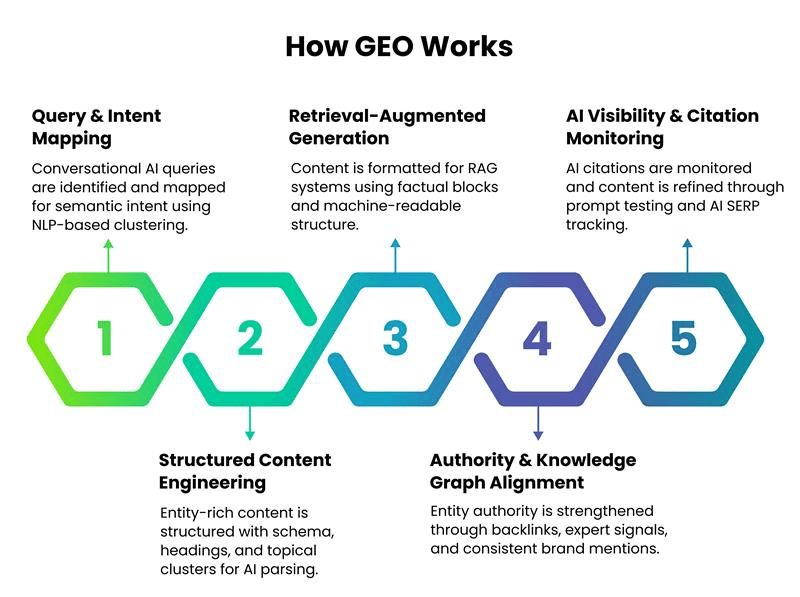
Generative Engine Optimization (GEO) means optimizing content, so AI systems and large language models can easily find, understand, and cite it when generating answers. It focuses on making content clear, structured, and reliable so it can be used by AI platforms like ChatGPT, Google Gemini, Microsoft Copilot, and Perplexity AI etc.
Why GEO Matters Today?
- Passage-Level Visibility: AI engines retrieve specific passages, so structured content improves chances of being surfaced as direct answers.
- High-Intent Leads: Cited content attracts users in the evaluation stage, increasing inquiries, demos, and qualified leads.
- Stronger Brand Authority: Frequent AI citations build topic associations, improving topical authority across AI and search engines.
- Cross-Platform Discoverability: Content becomes discoverable across AI platforms like ChatGPT, Microsoft Copilot, and Google Gemini.
Answer Engine Optimization: Powering the Shift from Search to Instant Answers
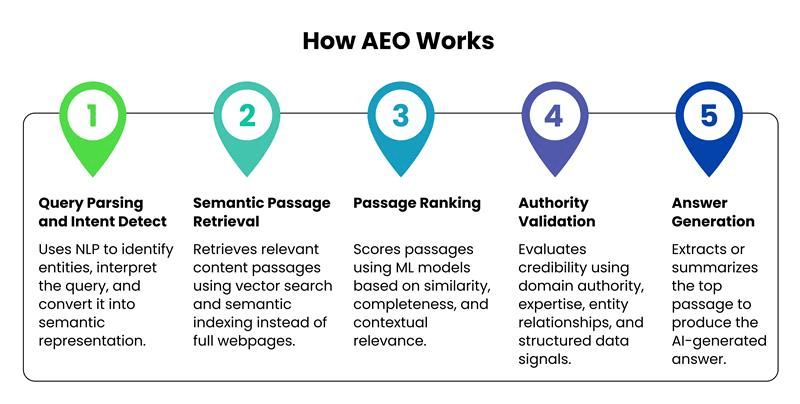
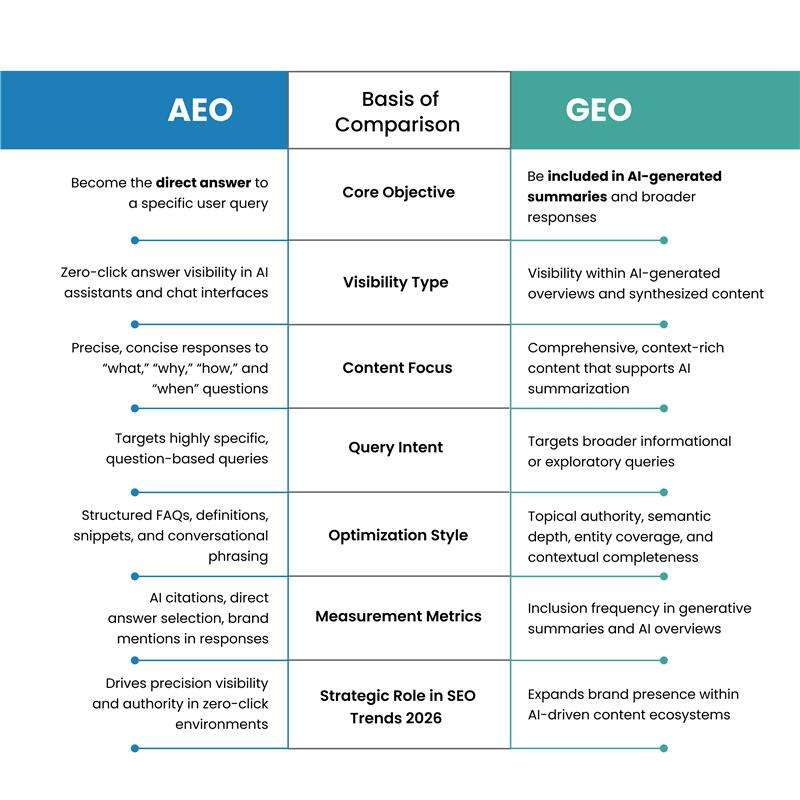
AEO is the process of organizing content so that precise responses to user queries can be extracted by search engines and AI assistants. It focuses on question-based formats, semantic relevance, and structured data, enabling NLP (Natural Language Processing) systems to understand intent, retrieve relevant passages, and surface them in featured snippets, voice search, and AI Search.
Why AEO Matters Today
- Zero-Click Visibility Gain: Captures visibility in answer boxes, even without website clicks.
- Improved CTR from Rich Results: Enhanced snippets drive higher engagement compared to standard search listings.
- Faster Content Retrieval: Improves indexing and retrieval speed through structured, machine-readable formatting.
- Conversation-Driven Discovery: Enables visibility in back-and-forth AI interactions, not just single keyword searches.
Voice and Conversational Search as a Growing Channel
Voice and conversational search involve users asking natural, full-sentence queries instead of typing keywords. It is becoming a key part in the broader shift to AI search. These systems use Automatic Speech Recognition (ASR), NLP, and LLMs to understand intent, identify entities, and retrieve relevant passages, delivering direct, context-aware answers instead of links.
Aligned with SEO Trends 2026, B2B professionals are increasingly relying on AI assistants to research vendors, compare solutions, and access real-time insights. With over 70% of marketers and B2B organizations now actively using AI tools (HubSpot), traditional rankings alone are no longer sufficient. Content structured for direct answer extraction is gaining greater visibility.
Visual Search Is Reshaping Discovery
Visual search allows users to search using images instead of text. These systems use multimodal AI to analyze images, detect objects, text, layouts, and brand elements, and convert them into structured signals linked to entities and user intent.
This is changing how discovery begins. Users now are searching with screenshots, product images, or UI captures instead of keywords. Tools like Google Lens use computer vision to interpret these visuals and connect them to relevant queries, products, and information.
Video Is Becoming the Default Trust Layer
Video search uses multimodal AI computer vision, Automatic Speech Recognition (ASR), and semantic matching to understand and index video content at a segment level.
Its rapid growth is driven by a clear shift in user behavior. Buyers today prefer seeing solutions in action rather than reading about them. In B2B, this means faster evaluation, higher trust, and quicker decision-making.
Search engines are increasingly surfacing exact video moments as answers, making video not just content, but a primary channel for influencing decisions, proving credibility, and capturing high-intent demand.
E-E-A-T: The Foundation of Content Trust
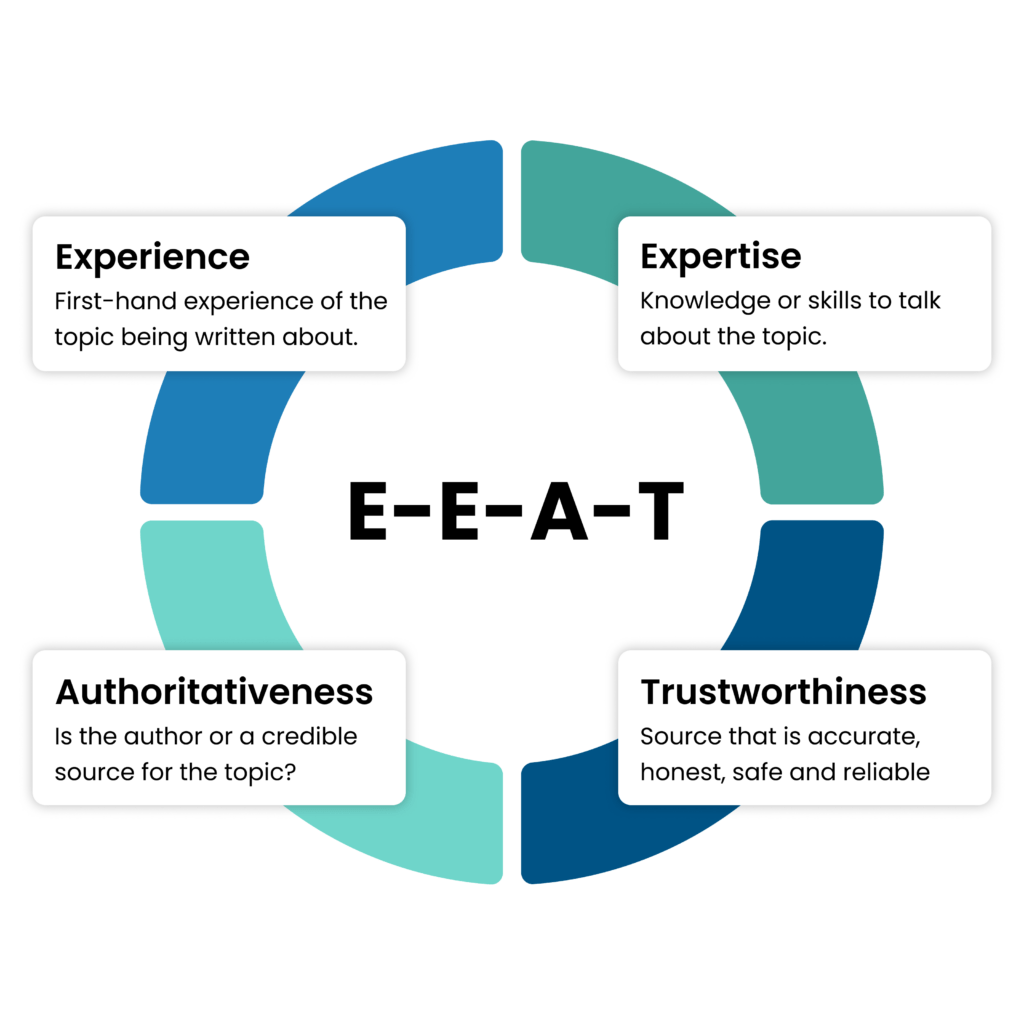
E-E-A-T (Experience, Expertise, Authoritativeness, Trustworthiness) is a framework used by search systems to evaluate the credibility of content, authors, and brands, especially for high-impact queries.
Behind the Algorithm:
Search systems assess E-E-A-T using signals like entity recognition, backlinks, domain authority, authorship verification, citation patterns, and structured data. AI models analyze these factors to determine if a source demonstrates genuine expertise, authority, and trust.
- Entity Trust Scoring in AI Retrieval
Strong E-E-A-T signals improve entity-level trust scores, increasing inclusion in AI retrieval and answer generation systems. - Authority-Based Ranking Signals
Search algorithms apply authority-based ranking to links, citations, and authorship, directly influencing rankings for competitive queries.
- Knowledge Graph & Entity Reinforcement
Consistent expertise signals strengthen knowledge graph associations, improving brand recognition across search and AI ecosystems.
How TSL Approaches the Future of SEO
As discovery shifts to AI search with SEO Trends 2026, TSL aligns SEO with how answer engines retrieve and surface information. Our approach prioritizes content retrievability, entity authority, and answer-level visibility across platforms like ChatGPT, Microsoft Copilot, and Google Gemini enabling content to be interpretable, extractable, and citable by AI systems.
TSL’s Execution Framework
- Structured Content Architecture
Using semantic headings, schema markup, and passage-level segmentation to help AI identify entities and extract precise answers. - Intent-Aligned Content Engineering
Building content around query clusters, entity relationships, and topical authority to match high-intent, answer-driven queries. - Authority & Entity Signal Building
Strengthening credibility through author signals, citations, internal linking, and authoritative backlinks to improve entity recognition.
As a result, TSL enables content to be interpreted and surfaced by AI systems aligned with the future of SEO, balancing machine understanding alongside human readability.
Connect with our experts today. 📞 +91 9529286060 | 📧 smohite@tslmarketing.com
FAQs
Generative Engine Optimization ensures content is structured, clear, and credible so AI systems can interpret, cite, and present it within generated responses.
Traditional SEO focuses on ranking web pages, while GEO focuses on being referenced and summarized within AI-generated answers and conversational search results.
AEO helps brands become the direct answer to user questions, increasing visibility in zero-click and AI-driven search experiences.
AI systems evaluate structure, clarity, authority signals, credible sources, and well-organized information before summarizing or referencing content.
E-E-A-T strengthens trust by highlighting experience, expertise, authority, and credibility, which AI systems increasingly prioritize when selecting content.
TSL builds structured, performance-driven content ecosystems that improve discoverability, strengthen authority, and support visibility across traditional and AI-powered search environments.