
What is Content Syndication in B2B?
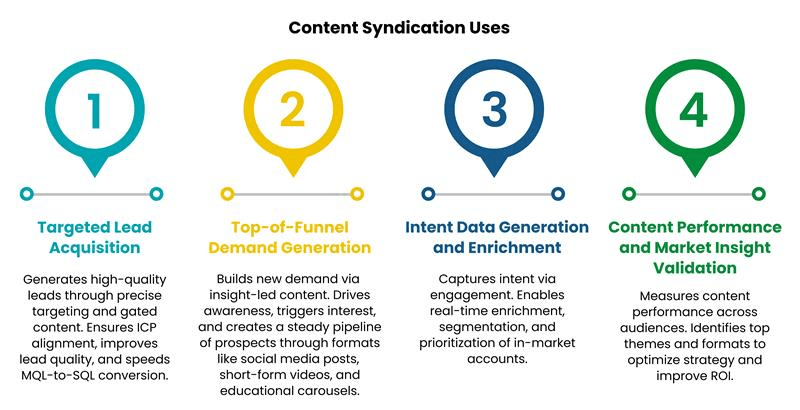
Content syndication in B2B is a demand generation strategy where businesses distribute content such as whitepapers, eBooks, reports, and case studies through third party platforms and publisher networks. These content syndication channels include publisher websites, content hubs, paid ad placements, and email campaigns, helping brands reach targeted audiences beyond their own channels.
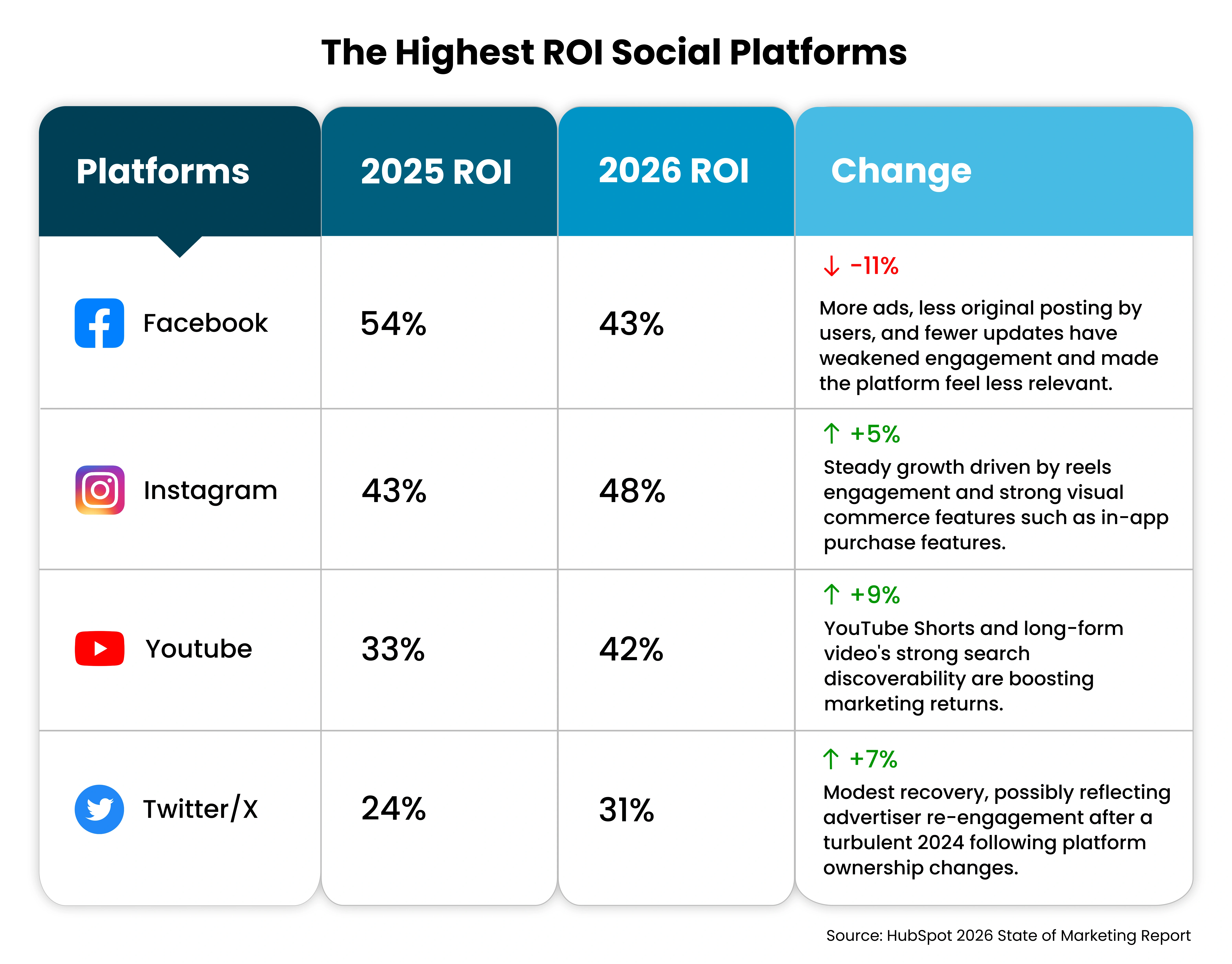
According to HubSpot’s 2026 State of Marketing Report, 50% of marketers plan to increase their investment in content marketing. 48% of marketers already repurpose or syndicate content across social media. Additionally, 45% of teams allocate between 10–20% of their budget to testing new content syndication channels.
Content syndication typically distributes gated content, assets that require prospects to share their details before accessing them, making it an effective way to capture leads who are already actively researching solutions. It is important because it extends reach, drives high intent lead generation, and supports full funnel marketing efforts. It also enables precise audience targeting based on industry, job role, intent signals, and solution-specific interest signals.
By accelerating pipeline creation and offering measurable outcomes like cost per lead and revenue contribution, content syndication ensures your valuable assets reach the right buyers.
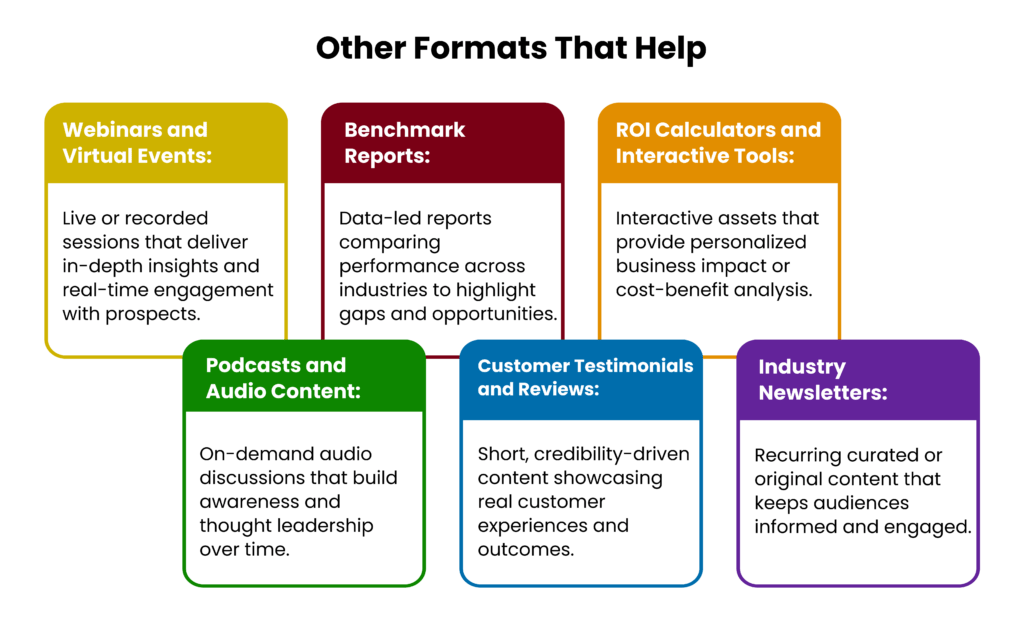
High-Impact Content Formats Powering Syndication
Top of the Funnel (Awareness Stage)
1. Thought Leadership Articles
Short, insight-driven articles that present market trends, challenges, or shifts in the industry.
When to use:
When buyers are identifying business problems, operational inefficiencies, or growth challenges, and researching possible approaches, frameworks, or categories of solutions to address them.
How to use it effectively:
- Take a strong, clear stance backed by data or industry-derived inferences.
- Focus on one specific problem or trend per article to keep the message sharp.
- Publish on content syndication platforms where your target audience is actively researching and consuming industry-led content.
- Add clear next steps such as linking to downloadable company assets.
What you gain:
It supports early-stage GTM efforts in untapped markets and new geographies by enabling faster market entry and deeper initial penetration. It strengthens brand visibility, credibility, and topical authority.
2. Infographics, Visual and Video Content
Visual formats that present key data points, comparisons, or processes in a simple and easy-to-scan way.
Formats to use:
Infographics, static social visuals, carousels, short-form videos, motion graphics, and data visualizations (charts/graphs).
When to use:
When your message is data-heavy, process-driven, or too complex to convey through text alone.
How to use it effectively:
- Keep colours, fonts, and icons consistent across all formats so the content is instantly recognizable as your brand.
- Keep videos under 90 seconds and lead with the key message in the first 5–10 seconds.
- Design for where it will be seen. LinkedIn carousels need bold text overlays since they autoplay on mute, while website infographics can include detailed labels.
Mid Funnel (Consideration Stage)
3.Guides, eBooks and Newsletters
Structured content that explains a topic, framework, or solution area in a clear and easy-to-follow format, along with newsletters that deliver ongoing, bite-sized insights.
When to use:
To capture consent from first-time visitors, build an owned audience, and nurture them with consistent engagement over time.
How to use it effectively:
- Break down complex topics into step-by-step explanations or frameworks
- Keep sections short and clearly labeled for easy reading
- Use newsletters to share consistent insights, trends, and updates
- Retarget readers with more specific content based on consumption patterns
What you gain:
Builds strong brand recall and mind share, keeps you top of mind, and brings in better, more ready-to-talk prospects.
4. Whitepapers and Research Reports
In-depth, data-led content that breaks down market trends, benchmarks, and solution approaches through structured analysis and clear point of view.
When to use:
Use this when target accounts are actively researching a defined problem and evaluating different ways to solve it.
Educational whitepapers work best in the upper-mid funnel to frame the problem space. Solution-led whitepapers are more effective in the lower-mid funnel as evaluation becomes more defined.
How to use it effectively:
- Start with a strong, original data point or market insight to establish authority immediately
- Include a concise executive summary that clearly outlines key takeaways upfront
- Structure the narrative around problem definition, evaluation criteria, and supporting evidence
- Focus on clarity and depth of insight rather than storytelling or anecdotal examples
- Align follow-up communication to engagement signals and level of content consumption
What you gain:
Drives stronger influence over evaluation criteria and builds analytical credibility.
5. Case Studies
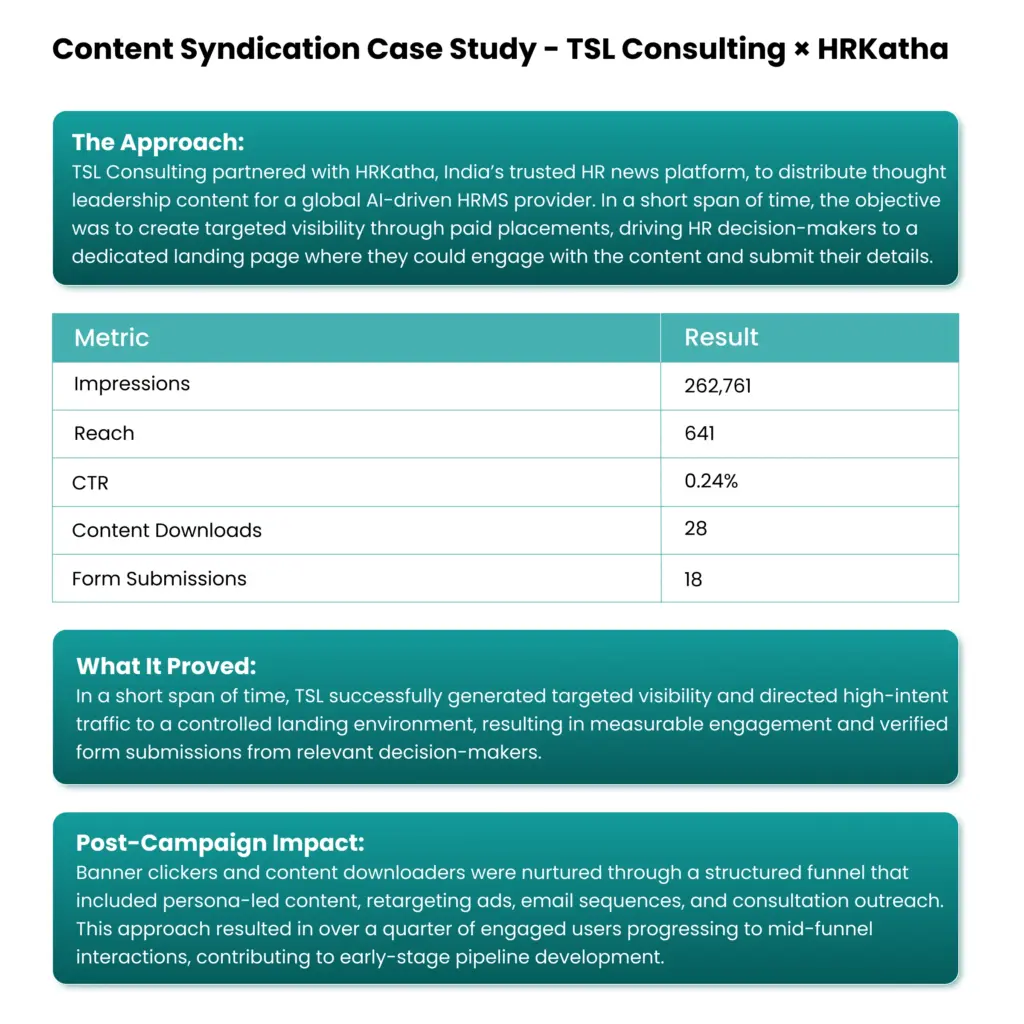
Outcome-driven content that highlights key achievements, milestones, and success stories such as implementation, performance improvement, and measurable business impact in real environments.
When to use:
When buyers want proof that a solution works in real scenarios.
How to use it effectively:
- Lead with quantified impact such as latency reduction, cost savings, or throughput improvement.
- Include the environment context such as cloud setup, tools used, or integration scope.
- Define the pre-implementation gap in terms of scalability, performance, or process inefficiency.
- Show before-and-after metrics to clearly illustrate the results achieved.
What you gain:
Credibility with late-stage buying groups. Higher engagement from decision-makers in active evaluation. Stronger conversion rates for the publisher targeting solution-aware audiences.
Bottom of Funnel (Decision Stage)
Promotional Targeted Ads
Paid placements including LinkedIn Sponsored Content, programmatic display ads, and third-party sponsored publisher ads. These are targeted at defined account segments to reinforce your solution at the final stage of vendor evaluation.
When to use:
When prospects are in the initial phase of the decision stage, actively shortlisting vendors and validating final concerns.
How to use it effectively:
- Target specific roles across the buying group using firmographic and intent signals
- Retarget high-intent actions such as pricing views, solution pages, and comparison activity
- Align messaging to final-stage objectives like ROI clarity, implementation effort, and integration fit
- Sequence creatives to reinforce one clear decision narrative across multiple touchpoints
- Maintain consistent visibility across platforms to stay present during final evaluation
What you gain:
Sustained influence during vendor selection, stronger recall at the point of decision, and reduced risk of losing momentum in the final stage.
Email Campaigns
Direct, role-specific email communication timed to support an active sales conversation and move prospect from evaluation to decision.
When to use:
When opportunities are in the final stage and stakeholders are validating details, resolving concerns, and moving toward sign-off.
How to use it effectively:
- Segment by buying role: business decision-maker, technical evaluator, procurement Head etc.
- Align messaging with active ad campaigns for a consistent narrative
- Align outreach with critical decision points: end of quarter, renewal windows, post-demo follow-up
- Tailor your messaging based on actual buyer behavior, not just name and company
What you gain:
Removes final friction in the decision process, aligns stakeholders faster, and helps progress active opportunities toward final agreement.
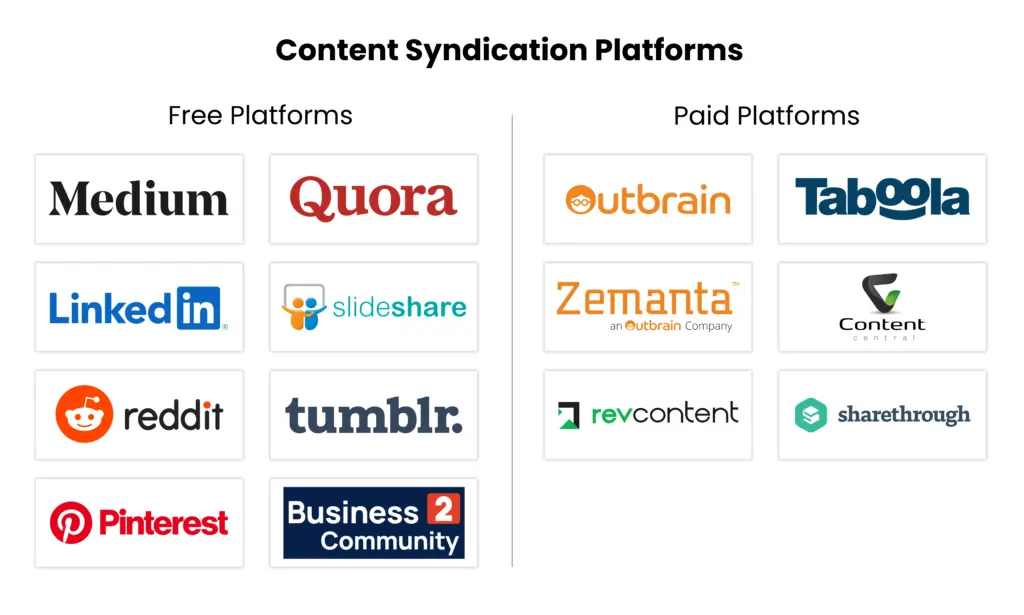
Top Content Syndication Channels
B2B buying journeys are no longer linear. Buyers engage across multiple channels, formats, and platforms before making decisions. B2B customers use an average of 10 interaction channels in their buying journey (up from 5 in 2016) (McKinsey and Company). This makes omnichannel content distribution essential for effectively reaching and converting modern buyers.
- Publisher Networks (B2B Media Platforms)
Publisher Networks are third-party industry platforms that distribute gated content to registered users within specific professional domains. They connect brands with audiences who have shown interest or intent by engaging with relevant content in their field. - Knowledge Aggregators and Industry-Led Content Hubs
Centralized platforms curate and host content across topics, allowing users to search, compare, and consume multiple resources in one place.
They are used because they attract high-intent users actively researching solutions, increasing the likelihood of qualified engagement and sustained interest. - Email Syndication (Third-Party Automated Email Campaigns)
Content is distributed through highly targeted email campaigns sent to permission-based contact databases.
It is used because it reaches specific job roles in verticals like IT, Finance, Purchase & Procurement, Marketing and Sales etc. This allows for more focused engagement with audiences who are more likely to raise direct enquiries. - Social Media and Professional Networks (Paid Distribution)
Content is promoted through paid campaigns targeting specific audiences based on job role, industry, company size, and engagement behavior.
They are used because they allow precise audience segmentation, real-time optimization, and direct integration with lead capture formats.
Core Principles Behind TSL’s Content Syndication Model
Signal-Based ICP Activation
Dynamic audience segments are built using firmographic filters combined with verified intent and engagement data. This ensures content reaches accounts actively researching relevant solutions, not just those that fit the profile on paper.
Context-Aware Content Placement
Content placement is matched to where buyers are in their research journey. This ensures that the right topic lands in front of the right audience at the right stage, not just the right demographic.
Closed-Loop Attribution Integration
All leads generated from content syndication and engagement data are integrated into CRM and marketing automation systems to track interest from first interaction to pipeline creation, nurturing and progression.
Post-Campaign Ad Strategy
Campaign budgets are reviewed and reallocated after execution toward channels, content types, and audience segments that show stronger performance. It is used to refine future activity by prioritizing what drives higher engagement, improved lead quality, and greater pipeline contribution.
TSL’s Unified Content Syndication Approach
Our content strategy is built on a structured system that controls targeting, distribution, and performance from end-to-end.
Audience definition starts with ICP mapping – layering filters like industry, job role, company size, and intent data to ensure content reaches the accounts that matter.
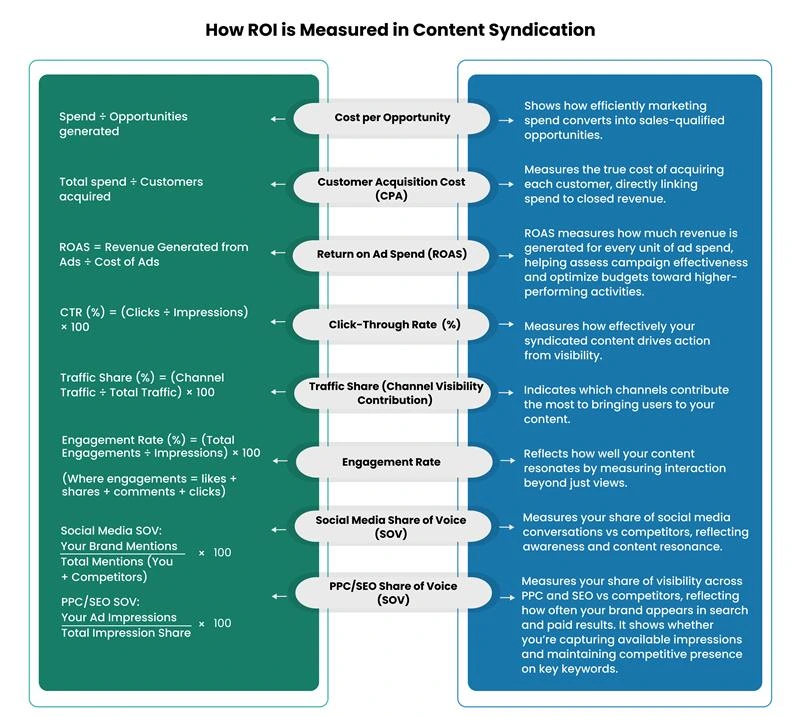
Paid channels are continuously evaluated against cost per lead, conversion rates, and pipeline contribution. Budgets shift toward what performs – and away from what doesn’t.
Performance is never measured in isolation. Multi-touch attribution ties every content interaction back to pipeline impact, so every decision is grounded in what actually drives revenue.
Contact our experts to build a high-performing content strategy for your business.  +91 9529286060 |
  smohite@tslmarketing.com
FAQs
In B2B, content syndication is used to distribute gated or ungated assets like whitepapers and reports across publisher networks to generate qualified leads.
Content syndication helps B2B companies expand reach by distributing content to new and relevant audiences beyond their owned channels. It drives consistent lead generation by placing gated assets in front of targeted buyers across multiple platforms. It also improves pipeline efficiency by aligning content distribution with audience intent, increasing the chances of conversion.
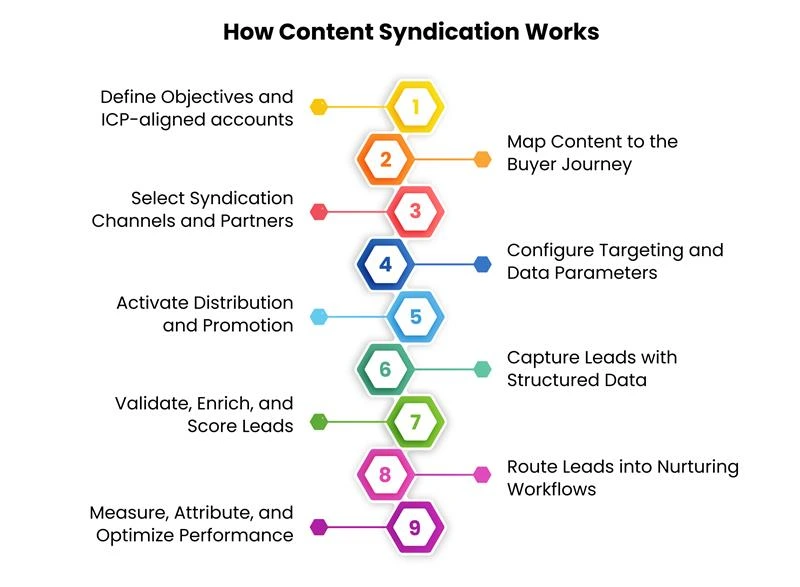
Content syndication involves creating valuable content, selecting relevant syndication partners, distributing that content through their networks, and then tracking its performance and the leads generated.
These are software solutions that automate content distribution, targeting, tracking, and lead capture across networks.
Whitepapers, eBooks, case studies, thought leadership articles, infographics, and solution briefs.
The best B2B content syndication platforms include social platforms, native content discovery platforms, search platforms, email/newsletter platforms, publisher and industry media platforms, programmatic/display platforms, community/Q&A platforms, and webinar/event platforms.
Strong ICP targeting, quality channels, relevant content placement, and continuous optimization.
It uses an ICP-led, data-driven model with channel scoring, CRM integration, and closed-loop attribution for better pipeline impact.