

What Makes Marketing Complex Technology Different?
A good technology product does not automatically make a good marketing story. The challenge becomes greater when the product is complex, the use cases vary by industry, or its benefits are not immediately obvious outside the technical team. Marketing has to do more than describe capabilities. It has to help potential customers understand where the technology fits, what problem it addresses and why it deserves attention.
High Technology Marketing starts well before a campaign goes live. It requires a closer look at the market, customer problems, buying journey and the story the business needs to tell. Tech Marketing works best when these pieces come together with clarity. B2B tech companies may have to differentiate between generating visibility and creating genuine interest in the technology.
Before You Launch a Campaign, What Comes First?
When a new technology product, market opportunity or business priority comes up, the conversation often moves straight to the campaign. Who should we target? What content do we need? Which channels should we use?
A few questions deserve attention before a complex B2B technology campaign takes shape. What is the business trying to achieve? Which market or accounts matter? What problem are customers trying to solve? Who is involved in the decision? And what needs to happen before a prospect is ready for a meaningful business conversation?
Consider a technology company entering a new industry. It may have a proven product, strong technical capabilities and successful customer use cases. Yet the way that product needs to be introduced can change considerably from one market to another. The audience may be different. The business problem may be framed differently. New stakeholders may become part of the decision. The questions customers ask may change too.
Which Accounts Matter, and Who Influences the Decision?
A simple marketing blueprint brings these considerations together:
Business objective → Market → Audience → Customer problem → Buying journey → Marketing approach
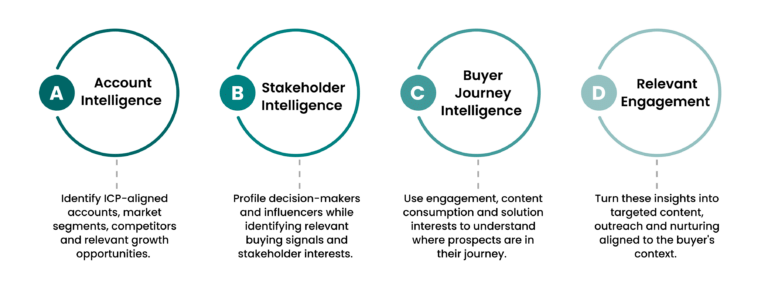
When technology is being marketed to business buyers, understanding the audience goes beyond defining an industry or job title. Intelligent account mapping can help identify the organisations that fit the opportunity, while stakeholder mapping brings greater clarity to the people involved in the decision-making process. A technical evaluator, business sponsor, procurement team and the final decision-maker may each have different questions and priorities.
That understanding can influence who marketing reaches, what it communicates and how the conversation develops. It also gives marketing and sales a stronger foundation for engaging prospects around their business context rather than simply presenting a product.
The purpose is not to create another lengthy strategy document. It is to give campaigns, content and channels a clear direction, so they work towards the same outcome rather than generating activity in isolation.
That distinction matters when marketing complex technology to business buyers. The goal is not simply to explain what a technology does, but to create enough relevance and context for the right prospects to engage with the problem, explore the possibilities and have a more informed conversation about the solution.
A campaign can generate activity. A marketing blueprint gives that activity direction.
Are You Marketing the Technology or the Problem It Solves?
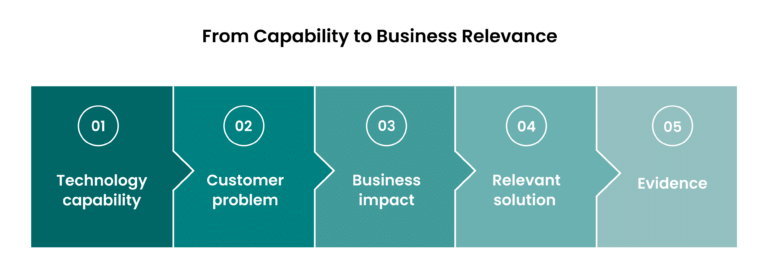
Technology companies naturally describe their products through features, specifications and capabilities. Customers often approach the same technology from a different starting point. They may be dealing with rising costs, operational inefficiencies, security concerns or disconnected systems.
Good B2B Technology Marketing puts the technology into that customer context.
Does the Same Technology Mean the Same Thing to Every Buyer?
Consider a cybersecurity solution. A CISO may want better visibility and reduced exposure. A business leader may be more concerned about risk and continuity. Procurement may want clarity on cost and commercial value.
The technology has not changed. The conversation has.
This becomes even more important for B2B tech companies selling across industries or use cases. The same product may address very different business problems depending on who is evaluating it and why.
The objective of B2B Tech Product Positioning is not to simplify the technology. It is to make its relevance easier to understand.
When the conversation begins with the customer’s situation, technical capabilities have somewhere meaningful to land. The prospect is no longer being asked to understand the technology first and work out its value later.
That is an important principle of High Technology Marketing: technical capability becomes easier to evaluate when buyers can see how it relates to the problems and outcomes that matter to them.
How Does TSL Turn Buyer Intelligence Into Engagement?
Knowing the right audience is only the beginning of effective B2B Tech Marketing. TSL combines intelligent account mapping, AI-led research and buyer insights to build a clearer view of the opportunity.
TSL’s AI-led approach supports ICP identification, predictive scoring and nurturing, complemented by domain expertise and data intelligence.
The result: a clearer view of who to engage, what matters to them and what conversation should come next.
Can Buyer Intelligence Change the Sales Conversation?
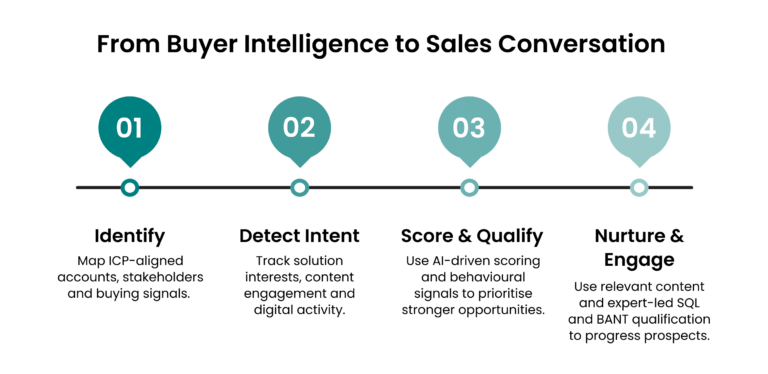
TSL progressively builds intelligence around fit, intent, engagement and sales readiness, moving prospects from initial identification towards meaningful sales conversations.
The result is a more informed marketing-to-sales transition, with conversations grounded in customer context, business need and buying intent.
From data to intent. From intent to qualification. From qualification to conversation.
Where Do Consultative Conversations Enter the Buyer Journey?
Buyer intent is only part of the story when the technology is complex. At some point, prospects need to speak with someone who understands both the technology and the business problem they are trying to solve.
TSL brings 200+ tech-fluent subject-matter experts into this stage of the journey. Their understanding of technology domains enables conversations to move beyond product features towards specific use cases, business challenges, solution relevance and desired outcomes. This consultative approach is supported by more than 20 years of B2B IT sales expertise.
The conversation also becomes a qualification exercise. TSL’s solution experts engage prospects around Budget, Authority, Need and Timeline (BANT), helping establish whether an opportunity has the business context and buying readiness required for sales progression. This helps identify and progress Sales Qualified Leads (SQLs) with clearer context around the opportunity.
If your technology marketing needs this depth of expertise, TSL can help bring strategy, buyer intelligence and consultative engagement together across the journey.
Talk to TSL
+91 95292 86060
smohite@tslmarketing.com

FAQs
1. What is High Technology Marketing?
High Technology Marketing is the process of marketing complex technology by connecting its capabilities to specific customer problems, business needs, buying journeys and desired outcomes. It goes beyond product features to make the technology relevant and easier for the right buyers to evaluate.
2. Why is marketing complex B2B technology different?
Complex B2B technology often involves multiple stakeholders, different use cases and longer buying journeys. A technical evaluator, business leader and procurement team may each look at the same solution from very different perspectives, making audience understanding and contextual messaging especially important.
3. How does buyer intelligence improve B2B technology marketing?
Buyer intelligence helps marketers build a clearer picture of target accounts, stakeholders, interests, engagement and buying signals. These insights can then inform targeting, content, nurturing and the timing of sales engagement.
4. What role does consultative selling play in technology marketing?
Consultative conversations bring technology expertise into the later stages of the buyer journey. TSL uses 200+ tech-fluent subject-matter experts to engage prospects around use cases, business challenges, solution relevance and desired outcomes, rather than focusing only on product features.
5. How does TSL qualify technology marketing leads?
TSL combines buyer intelligence, engagement signals and AI-driven scoring with expert-led qualification. Its solution experts assess prospects against Budget, Authority, Need and Timeline (BANT) to help identify and progress Sales Qualified Leads (SQLs) with clearer business context.
6. What should B2B tech companies consider when building a marketing strategy?
A strong strategy should connect the business objective with the target market, audience, customer problem, buying journey and marketing approach. The focus should remain on creating relevance for the right buyers rather than simply generating campaign activity.
